
Complete Pellet Plant
Setups & Machinery
From 1 TPH starter units to 5 TPH industrial plants — choose a pre-configured setup or build a custom configuration up to 20 TPH.
Biomass Pellet Plant Setups in India — 1 TPH to 20 TPH
Turnkey biomass pellet plant setups — from raw material intake to finished product, supplied and commissioned as a complete package. Choose from 1 TPH, 2 TPH, 5 TPH, or a custom configuration up to 20 TPH.
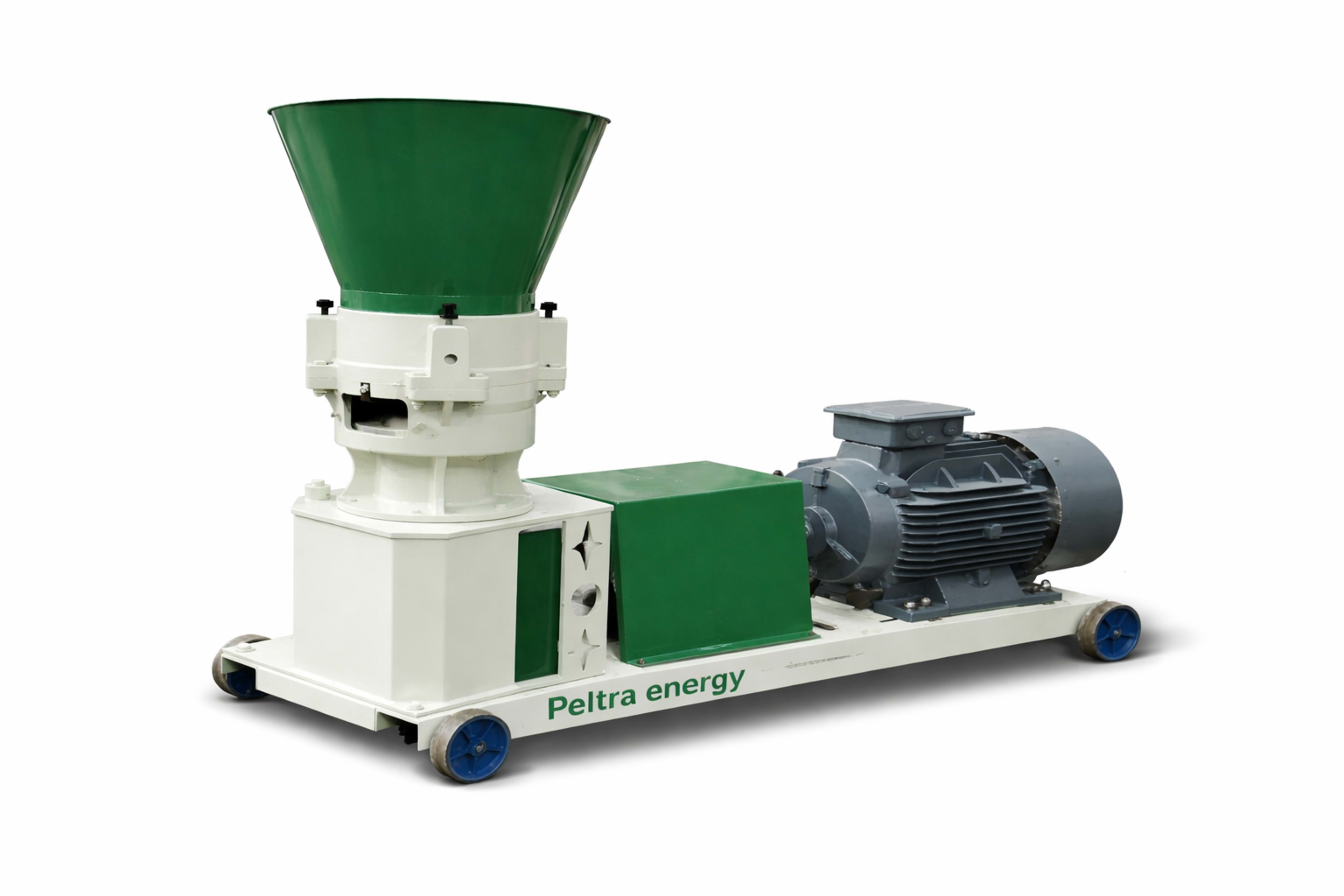
1 TPH Complete Pellet Plant
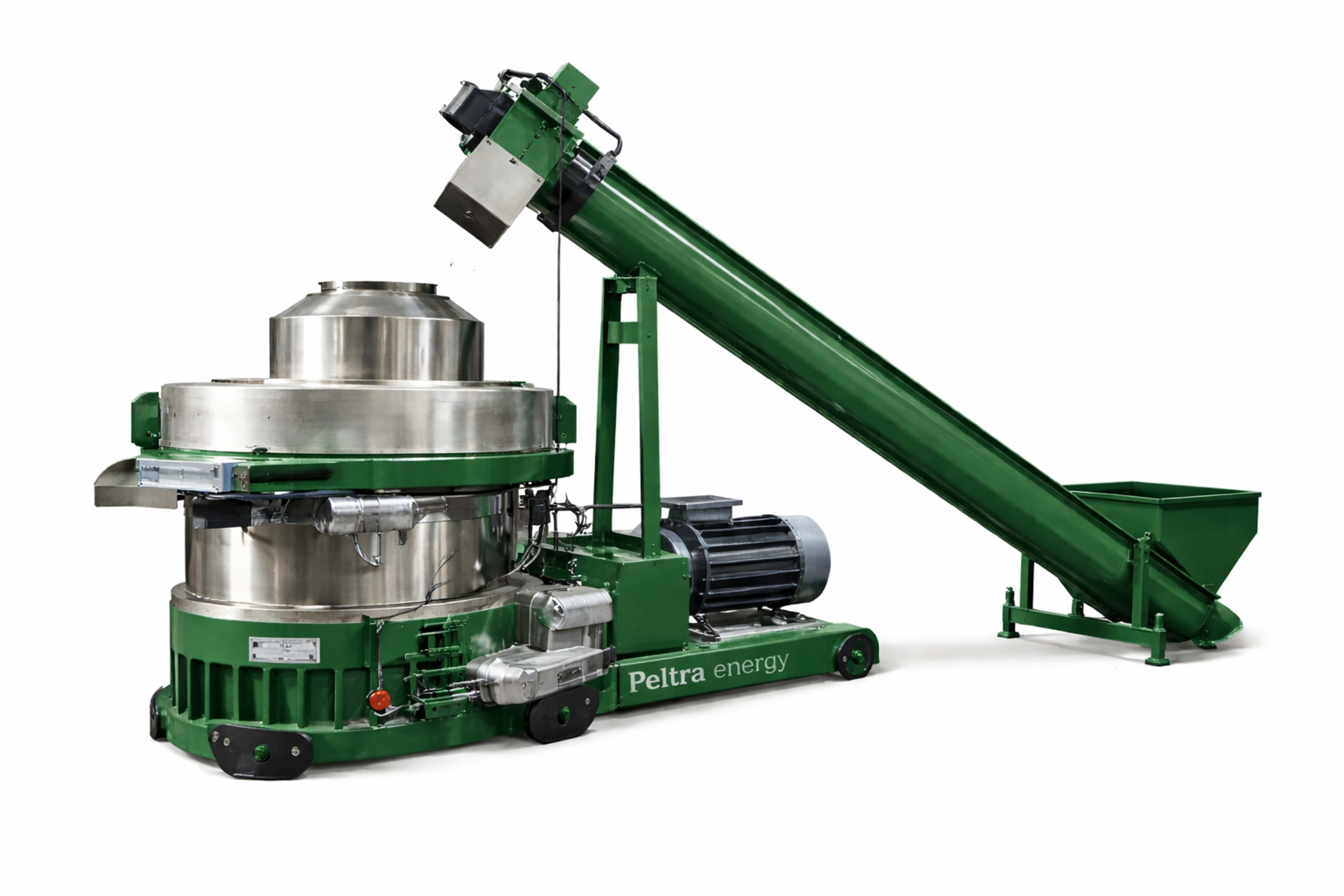
2 TPH Complete Pellet Plant
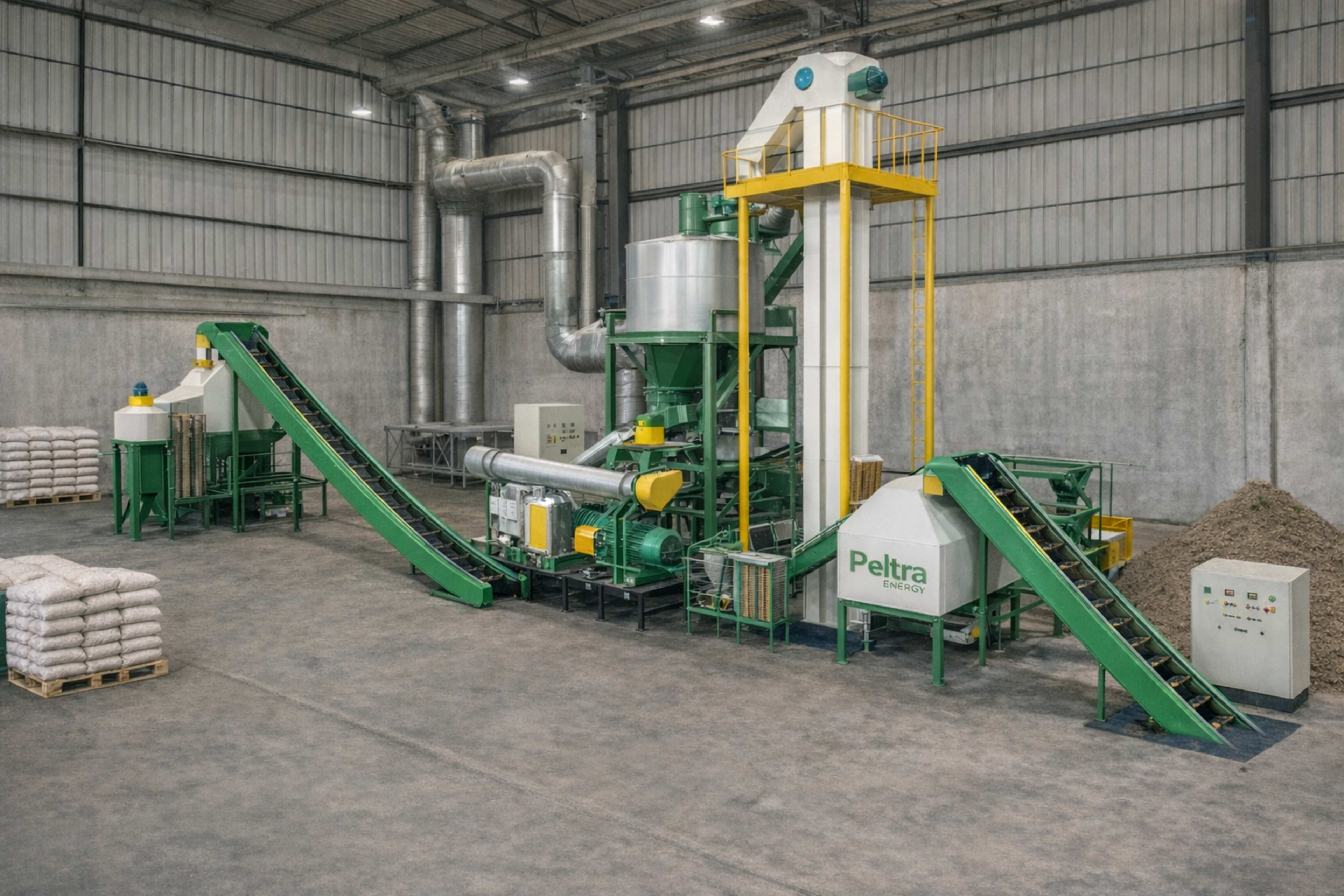
5 TPH Complete Pellet Plant
Custom Pellet Plant (5–20 TPH)
1 TPH Complete Pellet Plant
Commercial-scale biomass pellet plant producing 1 tonne per hour. Ring die technology with integrated drying, cooling, screening and automatic packing.
2 TPH Complete Pellet Plant
Industrial-scale plant for serious pellet production businesses.
5 TPH Complete Pellet Plant
Large-scale industrial pellet production facility for export and high-volume markets.
Custom Pellet Plant (5–20 TPH)
Large-scale custom-engineered biomass pellet plant designed to your exact capacity, raw material, and site requirements. Suitable for industrial producers, power utilities, and export-oriented units requiring bespoke configurations beyond standard packages.
Capacity Reference
Plant Capacity Specifications
Compare power consumption, floor area, and machine count across our standard plant configurations.
| Plant Capacity | Power (kW) | Floor Area | Machines |
|---|---|---|---|
| 1 TPH | 100–115 kW | 1130–1350 sq.ft | 10 |
| 2 TPH | 230–250 kW | 2360–2696 sq.ft | 10 |
| 5 TPH | 430–460 kW | 3372–3709 sq.ft | 10 |
| 5–20 TPH (Custom) | On request | On request | On request |
Standard Commercial Configuration
9 to 10 Machines per Plant
What We Offer
Machinery & Functions
Every standard plant includes these core machines, each serving a specific role in the biomass pellet production process.
Raw Material Storage Hopper
Stores large volume biomass before processing, ensuring continuous feed to the production line.
Belt Conveyor System
Transfers biomass to the grinding section with consistent, controlled material flow.
Heavy-Duty Hammer Mill
Reduces biomass size to 3–5 mm particles, achieving the uniform particle size required for pelletisation.
Cyclone Dust Collector
Removes dust generated during grinding, maintaining air quality and equipment health.
Rotary Drum Dryer System
Reduces biomass moisture to 10–15%, the optimal range for consistent pellet quality.
Pellet Mills (Ring Die)
Compresses biomass into dense pellets using high-efficiency ring die technology for industrial throughput.
Counter-Flow Pellet Cooler
Reduces pellet temperature after pressing to harden them and reduce residual moisture before packing.
Vibrating Screener
Removes fines and broken pellets, maintaining uniform product grade and customer-ready quality.
Automatic Packing Machine
Packs pellets into 25–50 kg bags with semi or fully automatic operation, integrated with conveyors.
Electrical Control Panel (PLC)
Controls entire plant operations from a single panel — monitoring, automation, and safety interlocks.
Why Peltra
What Sets Us Apart
We are not just equipment resellers. We work alongside you from selection through commissioning.
Needs Assessment First
We start by understanding your raw material, site, and output goals before recommending any machinery — no one-size-fits-all packages.
Sourced for Indian Conditions
Machinery selected to handle the variability of Indian biomass feedstocks — moisture, density, and particle size variations included.
Post-Installation Support
Our team stays engaged after commissioning for troubleshooting, operator training, and process optimisation.
End-to-End Coordination
From logistics and civil layout guidance to trial runs — we manage the moving parts so you can focus on your business.
Common Questions
Pellet Plant FAQs
What is the minimum capacity pellet plant available?
The smallest pre-configured setup is the 1 TPH complete plant, suitable for small to medium agro-processing businesses. It requires 100–115 kW power and approximately 1130–1350 sq.ft of floor area.
Do you supply plants above 5 TPH?
Yes. We offer custom configurations from 5 TPH up to 20 TPH per hour. Contact our team with your capacity, raw material, and site requirements for a tailored proposal.
How long does it take to commission a biomass pellet plant in India?
The 1 TPH plant takes 10–15 working days from delivery. The 2 TPH takes 20–30 days. The 5 TPH takes 30–45 days. Our team is on-site throughout commissioning.
What raw materials can these pellet plants process?
Our plants process rice husk, paddy straw, sawdust, wood waste, agro-residue, and other agricultural by-products. Machinery is selected for the moisture, density, and particle size variations typical of Indian feedstocks.
Do you provide installation and training?
Yes. All packages include on-site installation support and operator training. We also provide civil layout guidance, electrical diagrams, and process documentation. Post-commissioning support is available for ongoing optimisation.
Get in Touch
Have questions before requesting a quote?
Our team will help you understand which machinery or plant configuration fits your raw material, capacity, and site requirements.