1 TPH Complete Pellet Plant
Entry-level commercial production for growing biomass businesses
Power
100–115 kW
Floor Area
1130–1350 sq.ft
Equipment
10 units
10–15 days
Commissioning time
3–4 persons
Operators needed
~16,000 kg
Output per 2 shifts
2 years
Equipment warranty
Plant & Equipment Images
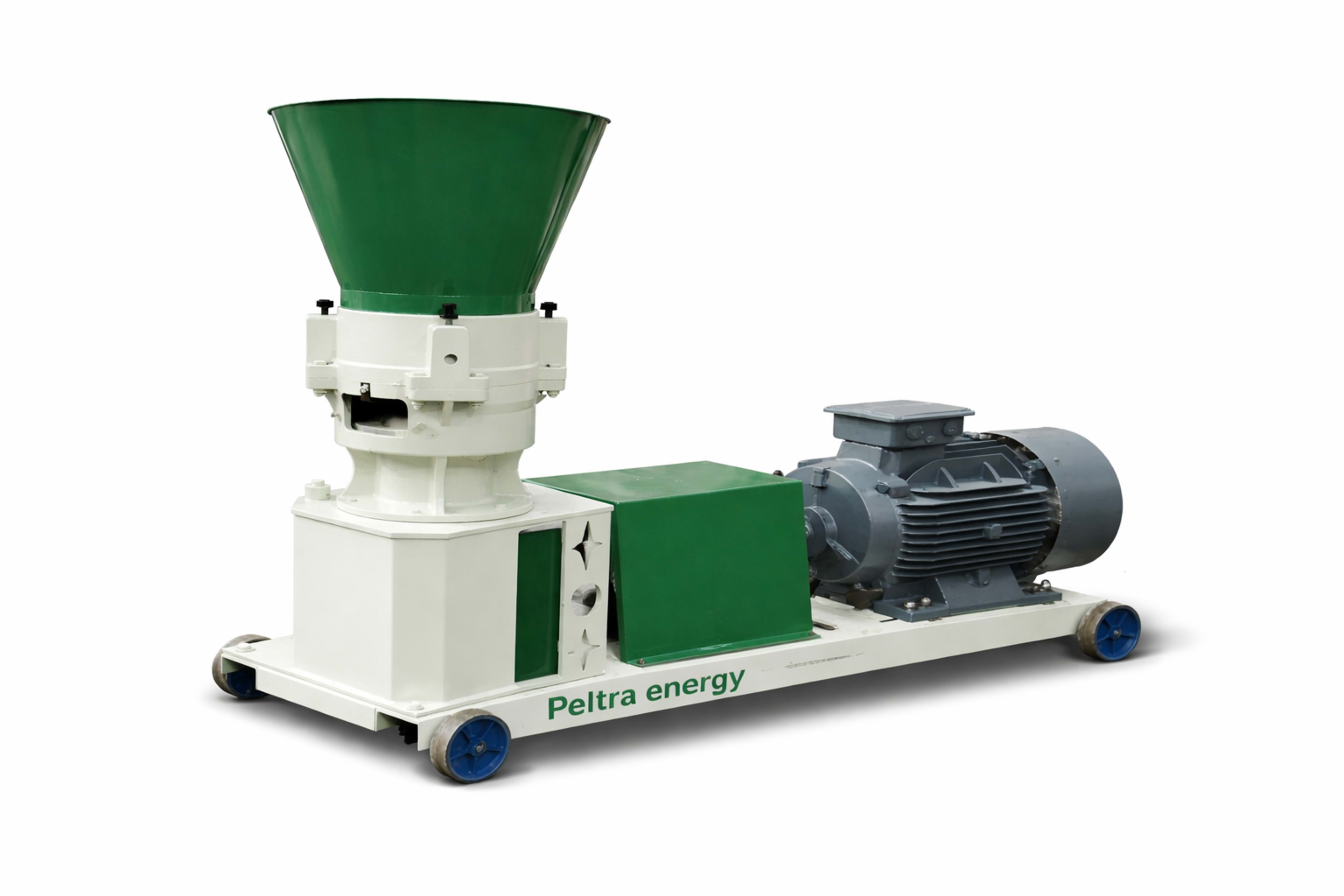
1 TPH plant — ring die technology for commercial production
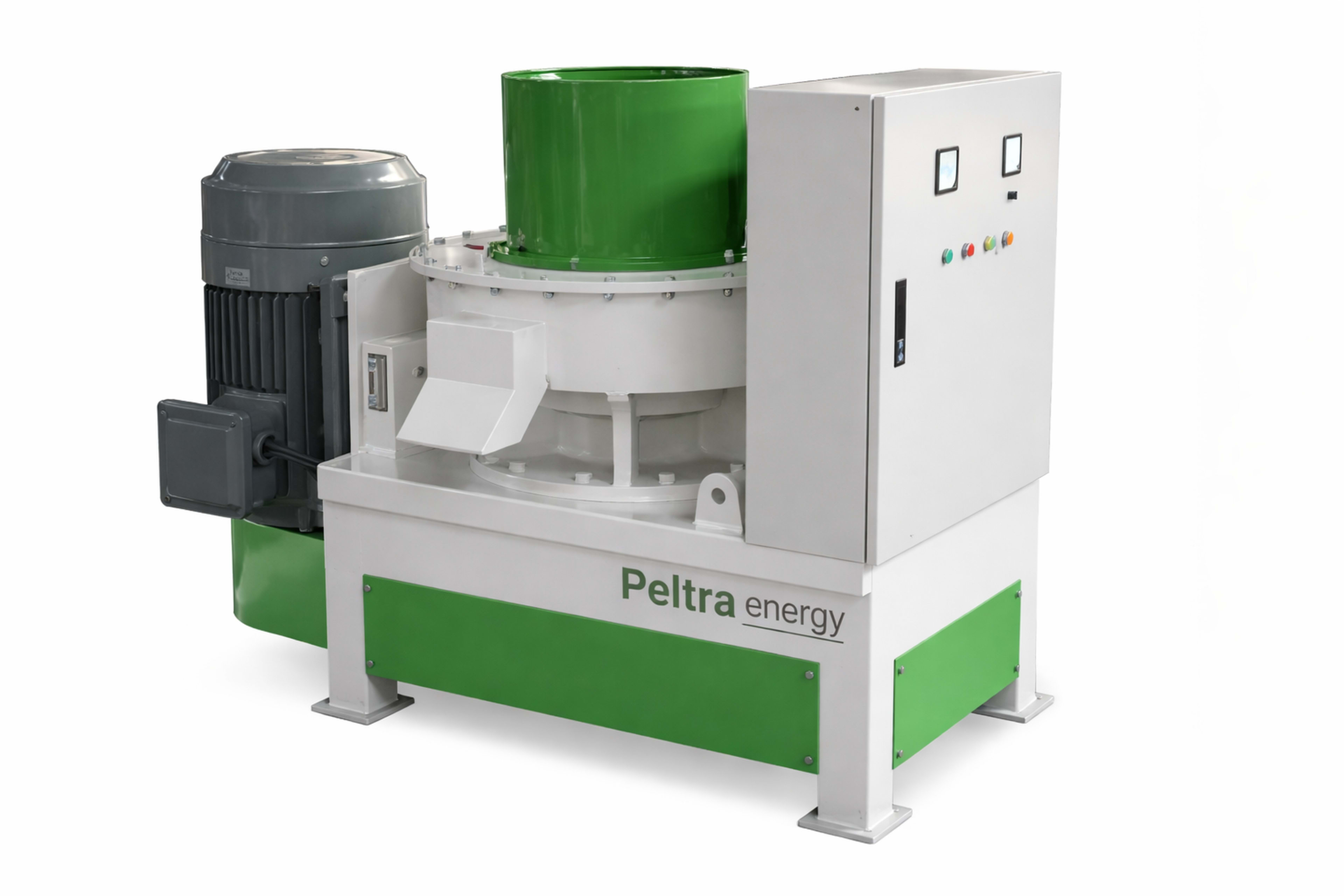
Vertical ring die pellet mill — commercial grade performance
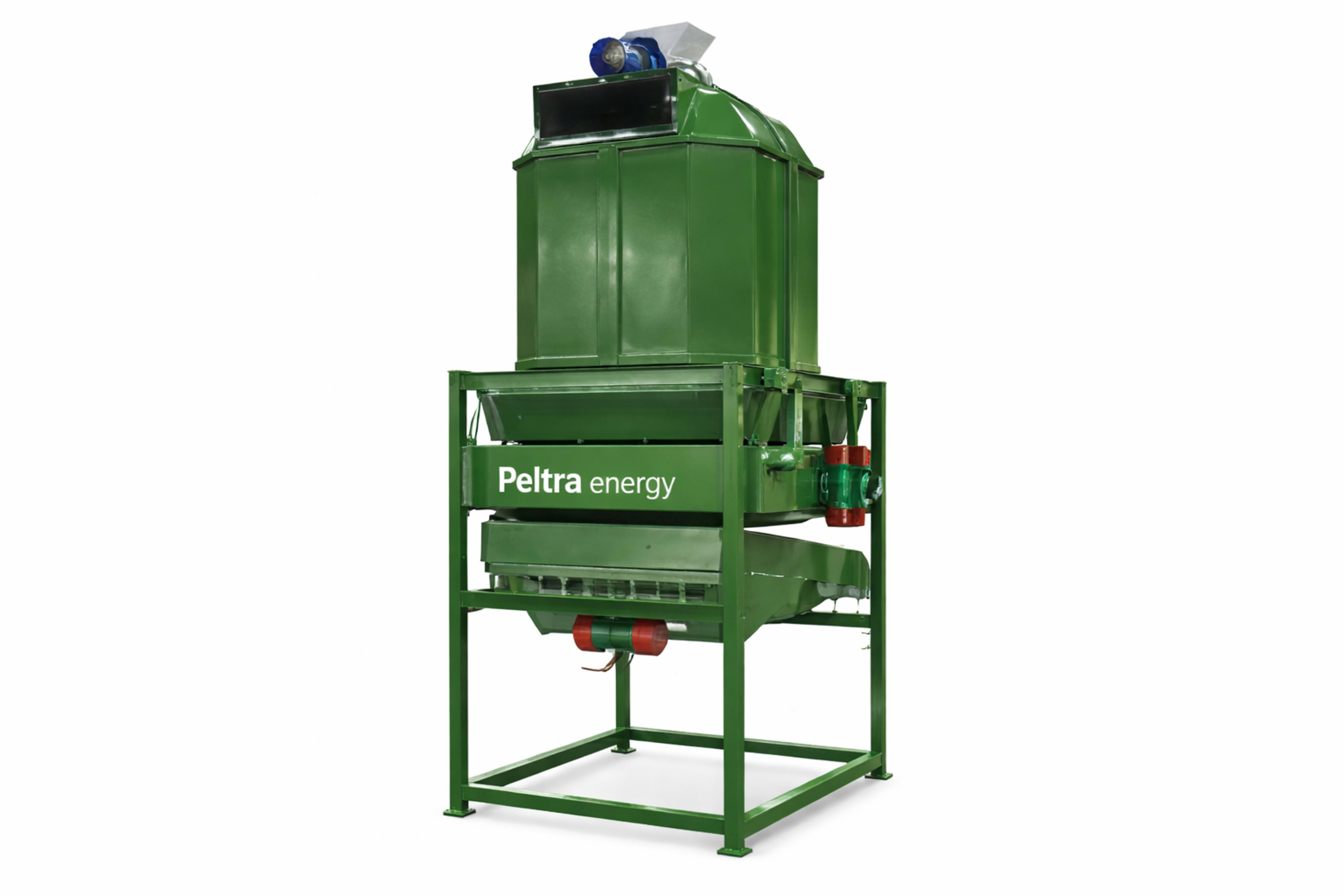
Counter-flow cooler for pellet hardening
Overview
About This Plant
The 1 TPH Complete Pellet Plant is suited for businesses that have validated their market, have a reliable biomass supply chain, and are ready to move into commercial-scale production. It bridges the gap between small-scale operations and full industrial throughput.
This plant uses a ring die pellet mill — which offers higher efficiency, better pellet density, and lower maintenance downtime during extended production runs. The ring die configuration is preferred for commercial operations processing mixed or harder biomass feedstocks.
The 1 TPH line is engineered for two-shift operation, allowing consistent daily output with adequate raw material supply. Commissioning is completed on-site by our technical team.
Best suited for
Specifications
Technical Specifications
- Rated output
- 1,000 kg/hr (1 TPH)
- Connected load
- 100–115 kW
- Floor area required
- 1,130–1,350 sq.ft
- Shed height (minimum)
- 18–20 ft
- Pellet diameter
- 6 mm / 8 mm (die dependent)
- Input moisture accepted
- Up to 25%
- Output moisture
- Below 10%
- Pellet bulk density
- 620–680 kg/m³
- Raw material accepted
- Sawdust, rice husk, paddy straw, agro-residue
- Typical daily output
- 16–20 tonnes (2 shifts)
- Operators required
- 3–4 persons per shift
- Power supply
- 415V, 3-phase, 50Hz
How it works
Production Process
Raw Material Preparation
Wood waste or agro-residue is crushed in the hammer mill and conditioned for uniform particle distribution.
Drying
The rotary drum dryer processes material maintaining consistent moisture across the batch.
Pelletisation
The ring die pellet mill produces dense, high-quality pellets suitable for industrial boilers and export specifications.
Cooling
Counter-flow cooler rapidly reduces pellet temperature while preserving surface hardness and reducing moisture to under 10%.
Screening & Packing
Vibrating screener removes fines, and the automatic packing line bags finished product for storage or dispatch.
What's included
Key Features
Included Equipment(10 items)
Common questions
Frequently Asked Questions
What is the daily production capacity of a 1 TPH pellet plant?
A 1 TPH plant produces approximately 1,000 kg of pellets per hour. Running two shifts of 8 hours each, daily output is typically 16 tonnes, subject to consistent raw material supply and moisture content within the accepted range.
How much power does a 1 TPH pellet plant consume?
Connected load is 100–115 kW across all machines. Actual running consumption is typically 70–80% of connected load depending on raw material hardness and moisture. A 415V three-phase supply is required.
How much space is needed for a 1 TPH pellet plant in India?
The plant requires 1,130–1,350 sq.ft of covered floor area with a minimum shed height of 18–20 ft. Additional open space is recommended for raw material storage and finished product staging.
What raw materials can a 1 TPH plant process?
The plant handles sawdust, rice husk, paddy straw, groundnut shell, mustard husk, and mixed agro-residue. Input moisture up to 25% is acceptable as the integrated rotary drum dryer brings it down to the 10–12% required for pelletisation.
How long does installation and commissioning take?
Commissioning typically completes in 10–15 working days from equipment delivery. This includes mechanical installation, electrical connection, trial runs, and on-site operator training conducted by our technical team.
Request a Quote
We respond within 48 working hours