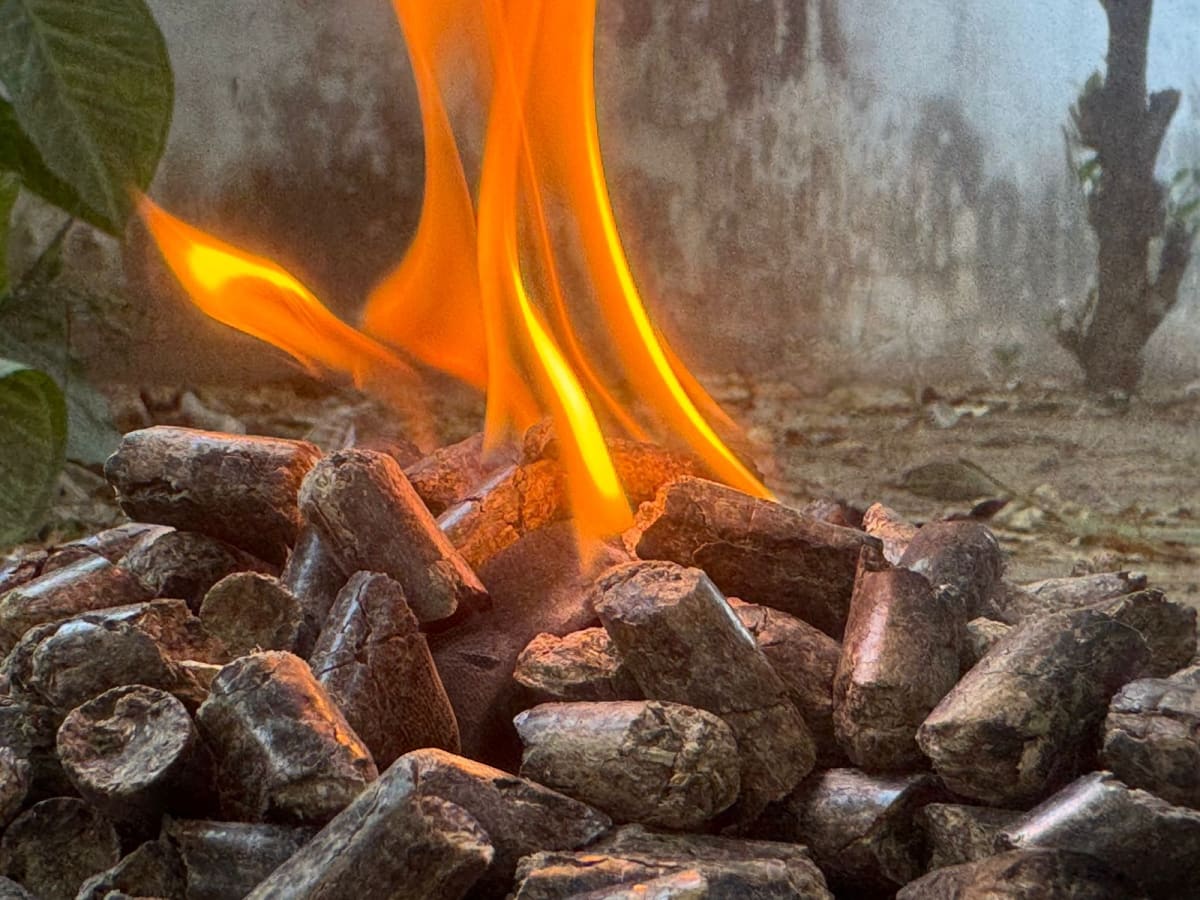
Biomass energy is heat or power produced from recently living organic matter — mostly wood and agricultural residue. Densified into pellets or briquettes, it becomes a clean, renewable, storable fuel that replaces coal and furnace oil.
- Biomass energy is heat or power from recently living organic matter — mostly wood and crop residue.
- It is renewable and near carbon-neutral because it returns only recently absorbed carbon.
- Best suited to steady industrial heat: boilers, kilns, dryers, and gasifiers.
What is biomass energy?
Biomass is any recently living organic material — sawdust, wood chips, rice husk, straw, shells. Because plants absorb carbon as they grow, burning that residue releases only the carbon it recently captured, making biomass a renewable, near carbon-neutral energy source.
Raw biomass is bulky and wet, so it's usually compressed into biomass pellets — dense, dry, uniform fuel that stores well and feeds automatically into modern boilers.
Where biomass comes from
Almost any dry farm or forestry residue can become fuel:
Why biomass matters
Renewable & low-carbon
A carbon-neutral cycle that keeps waste out of open burning and landfill.
Reliable heat
A clean, storable replacement for coal and furnace oil — see pellets vs coal.
Rural income
Turns crop residue farmers once burned in fields into a cash by-product.
Easier compliance
Lower emissions help industries meet pollution-control norms.
How to get started with biomass
If you need fuel, start by matching a pellet grade to your boiler — browse our pellets or request a bulk quote. If you generate a lot of biomass waste, you could make pellets yourself with a pellet plant.
Not sure which path fits? A short conversation is the fastest way to a clear answer — book a free consultation and we'll point you in the right direction.
How biomass compares to fossil fuels
The key difference is the carbon cycle. Coal and oil release carbon locked underground for millions of years, adding to the atmosphere. Biomass only returns the carbon its plants absorbed over the last season, so used sustainably it adds little or no net carbon — which is why it counts as renewable energy.
Biomass will not replace every fuel. It shines for steady industrial heat: boilers, kilns, dryers, and gasifiers that run for hours at a time. For those jobs it is one of the simplest, lowest-cost ways to cut emissions and fuel bills at once — see how it stacks up against coal.
The forms biomass energy takes
Pellets
Dense, uniform fuel for automatic boilers — the most common industrial form.
Briquettes
Larger compressed blocks for manual-fed furnaces and kilns.
Biogas
Gas from decomposing organic matter, used for cooking and power.
Biofuels
Liquid fuels like ethanol and biodiesel for transport and gensets.
Why biomass fits India so well
India produces enormous volumes of crop residue every season — rice straw, husk, bagasse, cotton stalk — much of which is still burned in open fields, wasting energy and fouling the air. Pelletising that residue turns an environmental problem into an industrial fuel, and gives farmers a buyer for material they once paid to clear.
On the demand side, India's industry runs on process heat: boilers, kilns, dryers, and furnaces in every district. That pairing — abundant local feedstock next to steady thermal demand — is why biomass has become one of the most practical renewable options for Indian manufacturing.
Our team can help you pick the right fuel or plan a pellet plant — no cost to ask.
Where to go from here
Biomass energy is one of the most practical renewables for Indian industry because it uses residue that already exists and equipment that's already common. Whether you want to burn it or produce it, the barrier to entry is low.
If you're ready to act, browse pellets to buy fuel, explore pellet machinery to make it, or book a consultation to talk it through.
Keep reading: what biomass pellets are, types of pellets, pellets vs coal, and how a pellet plant works.