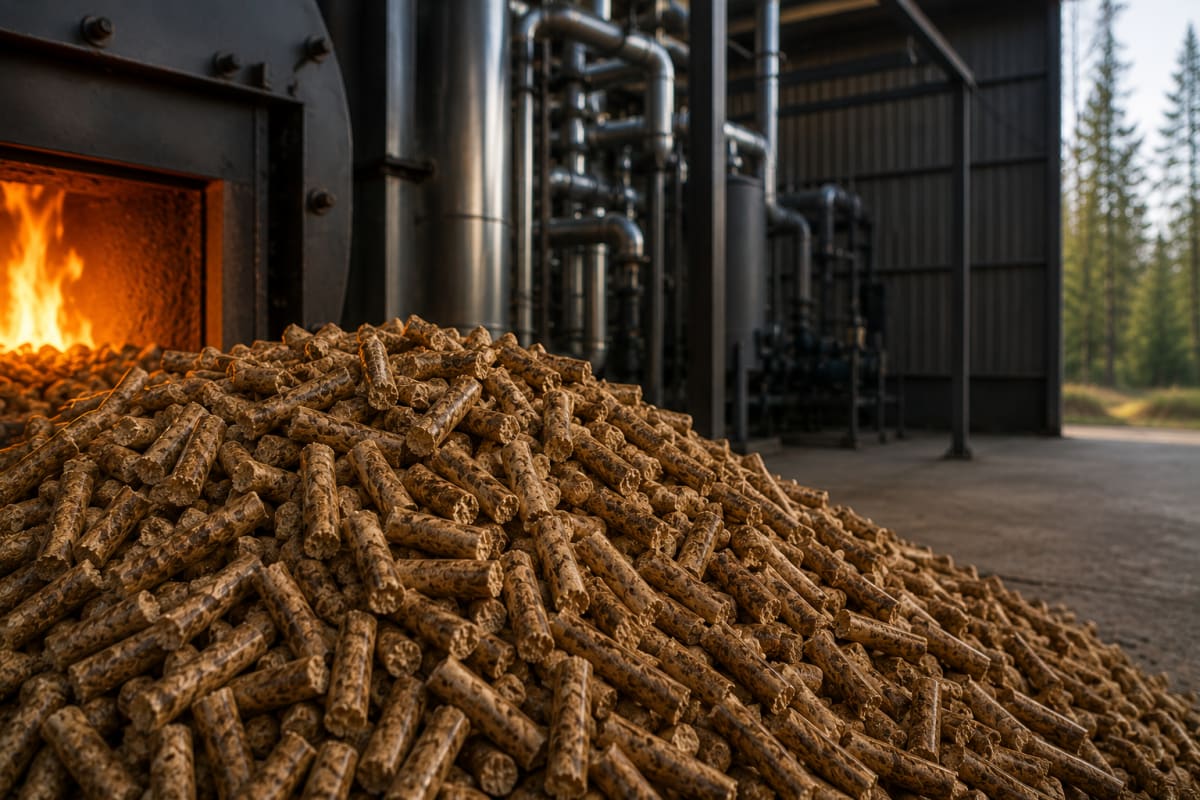
Most biomass pellets deliver 3,800–4,800 kcal/kg (GCV). Wood pellets sit at the top of that range; agro-residue pellets a little lower. Moisture and ash pull the number down, so a dry, clean, well-made pellet always tests higher.
- Most biomass pellets deliver 3,800–4,800 kcal/kg (GCV); wood tops the range, agro-residue sits lower.
- GCV is the quoted figure; NCV runs 6–8% lower and reflects real boiler output.
- Moisture and ash are the biggest levers — drier, cleaner pellets always test higher.
GCV vs NCV
Calorific value comes in two forms. Gross Calorific Value (GCV, or higher heating value) is the total heat released, including the energy recovered when water vapour from combustion condenses. Net Calorific Value (NCV, or lower heating value) excludes that vapour energy — it's closer to what you actually get in a real boiler.
NCV runs roughly 6–8% below GCV for biomass. Suppliers usually quote GCV, so always check which figure a test report shows before comparing two fuels.
Typical values by feedstock
Approximate GCV ranges for common Indian biomass pellets.
Wood / sawdust
Highest and most consistent
Rice husk / straw
Higher ash lowers output
Groundnut shell
Good energy, low moisture
Bagasse / cane trash
Widely available
What raises or lowers the number
Moisture
Water carries no energy and steals heat to evaporate. Every extra percent of moisture cuts usable calorific value — which is why pellets are dried below 10%.
Ash content
Ash is the non-combustible mineral fraction. The more ash, the less fuel per kilogram. Clean wood pellets sit under 1.5%; some agro-residues run higher.
Fixed carbon
More fixed carbon and volatile matter means more energy locked in the fuel. Feedstock chemistry sets this baseline.
How to read a fuel test report
A proximate analysis report lists these values — here's what each one tells you.
- 1
Moisture (%)
Lower is better. Look for under 10% on a finished pellet.
- 2
Ash (%)
The mineral residue after burning. Lower means more usable fuel and less slag.
- 3
Volatile matter (%)
Gases released on heating — they drive easy ignition and flame.
- 4
Fixed carbon (%)
The solid char that sustains the burn. Higher supports steady heat.
- 5
GCV (kcal/kg)
The headline energy figure, measured in a bomb calorimeter. Confirm it's GCV, not NCV.

Using calorific value to plan fuel consumption
Calorific value is how you turn a heat requirement into a tonnage. Divide the heat your process needs by the fuel's NCV and your boiler's efficiency, and you have your consumption. Two fuels with different calorific values are only comparable this way — a cheaper fuel with a lower kcal/kg can cost more per unit of steam.
This is also why moisture specs belong in your purchase contract. A batch that arrives two points wetter than quoted quietly raises your consumption for the month. Buying on a stated GCV with a moisture limit — and spot-checking with a test report — keeps your fuel budget honest.
1 kcal/kg ≈ 0.004184 MJ/kg. So a 4,300 kcal/kg pellet is about 18 MJ/kg — handy when comparing against international specs quoted in megajoules.
Reading the number in context
Calorific value only tells half the story — always read it alongside moisture and ash, because a high headline figure means little if the fuel is damp or ashy. A clean, dry pellet with a modest GCV often outperforms a wetter one that looks better on paper.
When you compare suppliers, ask for a full proximate analysis and confirm whether the figure is GCV or NCV. Need help reading a report? Talk to our team.
Related reading: types of biomass pellets by feedstock, paddy straw pellet prices, and how pellets compare with coal. If you're evaluating pellet production as a business, our team covers feasibility, NABARD subsidy, and DPR — book a consultation.