
Hydrate a clean substrate — straw or hardwood pellets — pasteurise it, mix in oyster spawn, and incubate warm and dark until white. Then expose to light, air, and humidity, and harvest in days. First flush usually comes 3–5 weeks from spawning.
- Oyster mushrooms are the easiest gourmet mushroom to grow — fast, forgiving, and productive.
- Hydrate a clean substrate, pasteurise, add spawn, incubate to solid white, then fruit with light, air, and humidity.
- First harvest usually comes 3–5 weeks after spawning, with two to three flushes per block.
Why oyster mushrooms first
Oyster mushrooms (Pleurotus) colonise fast, tolerate beginner mistakes, and fruit on cheap agricultural residue — which is why almost every grower starts here. The single biggest factor in success is a clean, consistent substrate, and that's where substrate pellets make life easy.
The grow cycle, start to finish
Six steps from dry pellets to a harvest.
- 1
Prepare the substrate
Hydrate straw or hardwood pellets with clean water until they expand to a fluffy, field-capacity mass.
- 2
Pasteurise
Hold the wet substrate at 65–75°C for 1–2 hours to knock back competitors, then cool to room temperature.
- 3
Inoculate
Mix in oyster grain spawn at about 2–5% of substrate weight, working in a clean area.
- 4
Incubate
Pack into bags and keep at 22–26°C in the dark until the substrate turns solid white (10–20 days).
- 5
Fruit
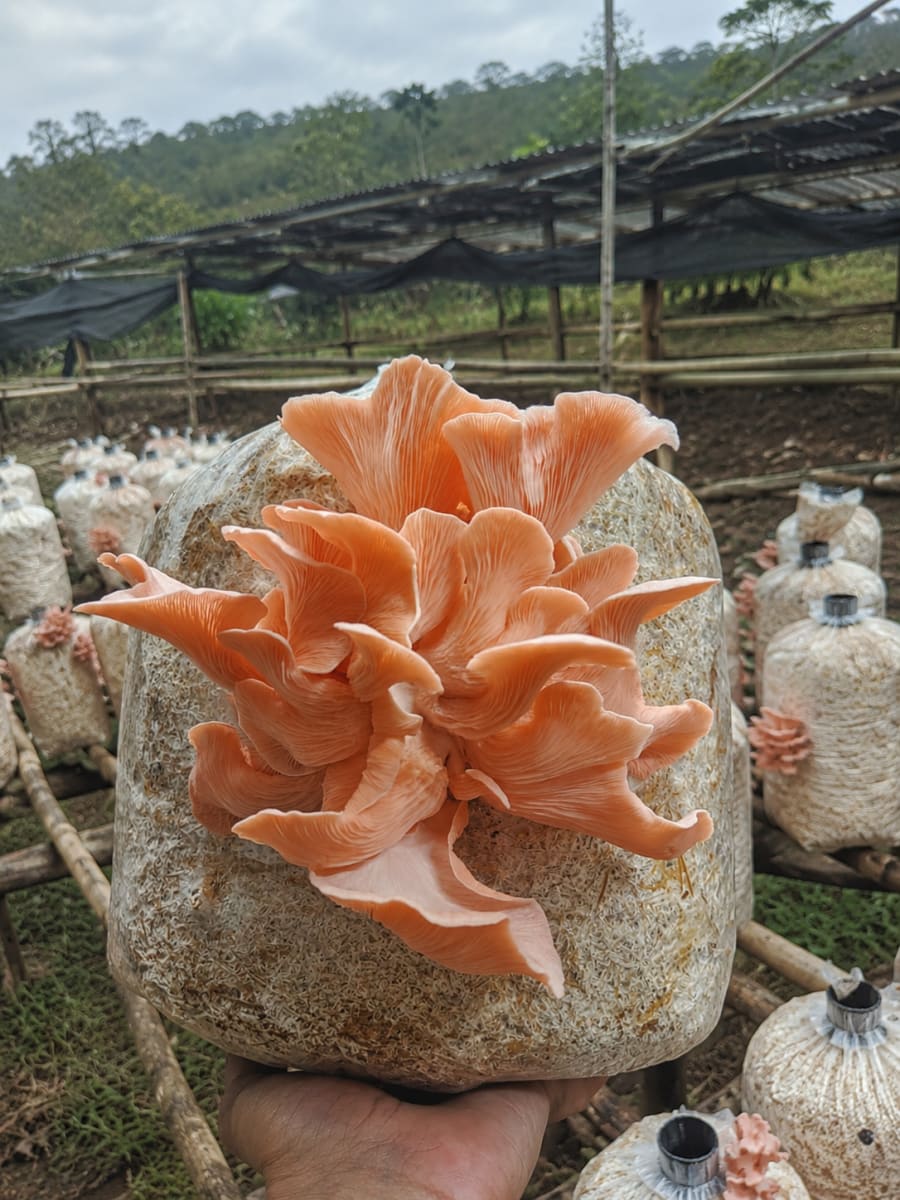
Cut slits, then give light, fresh air, and high humidity. Pins appear within days.
- 6
Harvest
Pick just before the caps flatten. Rest the block and it will flush again.
Ideal fruiting conditions
Hold these ranges once you move blocks to fruiting.
Temperature
Steady, avoid heat spikes
Humidity
Mist to keep pins from drying
Air exchange
High CO₂ causes long stems
Substrate moisture
Field capacity, not soggy
Common problems and how to fix them
Most first-grow failures trace back to two things: contamination and dryness. Green or black mould usually means the substrate was not pasteurised well or spawn was added in a dirty space — work clean and keep the substrate at the right moisture. Long, thin stems with tiny caps signal too much CO₂, so increase fresh-air exchange.
If pins form but shrivel before growing, the air is too dry — raise humidity and mist more often. And if a block never fully colonises, it was likely too wet or too cold; hold 22–26°C and squeeze-test the substrate so it is damp, not dripping. Clean substrate pellets remove much of this guesswork.
Getting bigger, more consistent yields
Right spawn rate
2–5% spawn by weight speeds colonisation and crowds out contaminants.
Hold humidity
85–95% during fruiting keeps pins from drying out and aborting.
Fresh air
Good air exchange gives fat caps and short stems instead of leggy growth.
Work the flushes
Rehydrate and rest blocks to pull a second and even third harvest.
Choosing and handling spawn
Spawn is your seed — its quality caps your harvest. Buy fresh grain spawn from a reliable lab, look for pure white growth with no green or black patches, and use it within a few weeks. Store it refrigerated, never frozen, and bring it to room temperature before inoculating so the shock does not slow colonisation.
Rate matters too. For oyster mushrooms, 2–5% spawn by substrate weight is the working range — more spawn colonises faster and outruns contaminants, which is worth it for beginners. Crumble it evenly through the substrate rather than layering it, so the mycelium meets food in every direction.
Harvesting, yield, and selling
Pick oyster mushrooms just before the cap edges flatten and curl upward — that is peak weight and shelf life. Twist or cut whole clusters rather than single caps, and harvest the entire flush at once so the block resets cleanly for the next one. Expect the first flush to be the biggest, with two or three worthwhile flushes per block.
Fresh oysters are delicate: cool them quickly, pack them in breathable containers, and sell within a couple of days for best quality. Growers who stagger blocks weekly instead of starting everything at once keep restaurants and retailers stocked year-round from a small room.
Our pasteurise-ready straw and hardwood pellets rehydrate into a clean, consistent substrate in minutes.
Your first grow, made simple
Oyster mushrooms reward beginners because the process is forgiving and the payoff is fast. Nail cleanliness and moisture, and the mushrooms mostly take care of themselves.
The easiest way to start well is with a clean, consistent substrate — shop our substrate pellets and skip the mess of prepping loose straw.
Substrate deep-dives: straw pellets, hardwood pellets, and all-in-one substrate pellets.