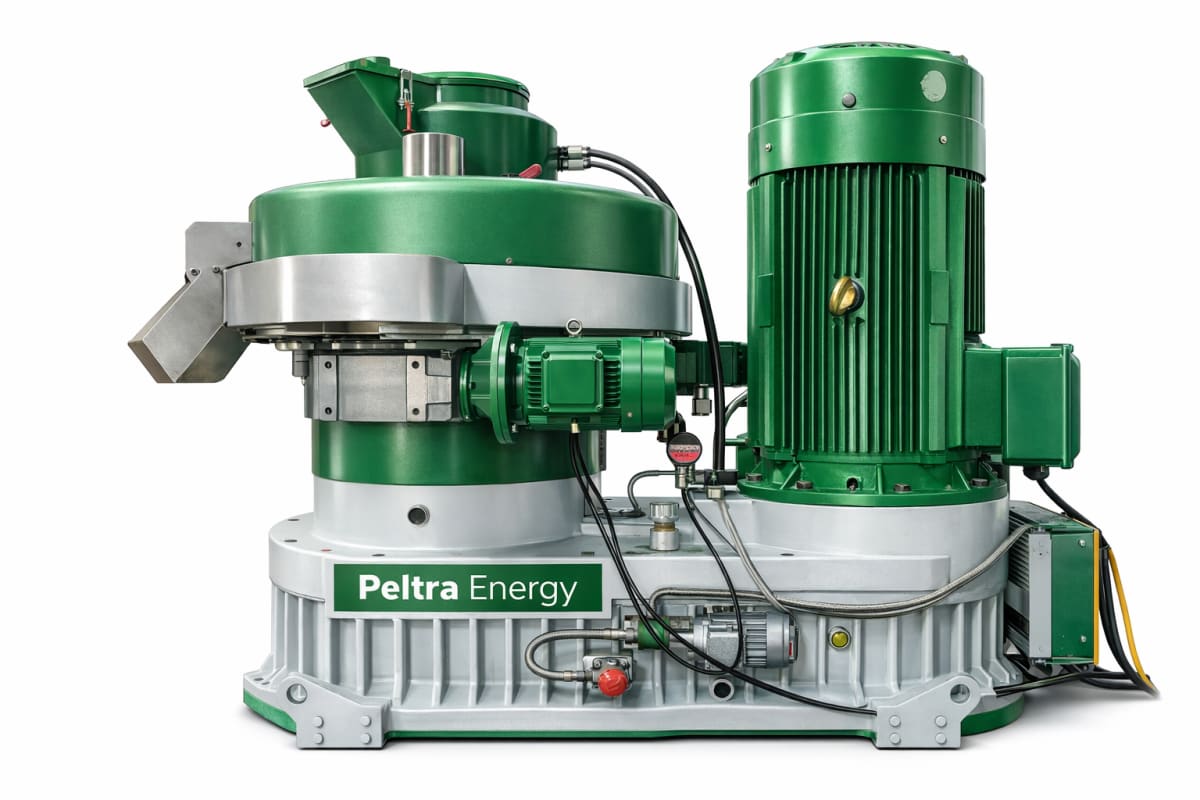
To start a pellet plant business in India, confirm a steady, low-cost biomass supply, pick a plant capacity to match it (from 1 TPH up to 10 TPH), buy and install the machinery line, secure licences and power, and line up buyers before you commission. Project cost scales with capacity — roughly ₹50 lakh–1 crore for an entry 1 TPH line, ₹1.5–3 crore for a 2 TPH commercial plant, and ₹3–5 crore to ₹5–10 crore or more for 5–10 TPH industrial plants — and NABARD/MNRE schemes can subsidise part of it. The business is profitable when the plant runs at high utilisation on cheap residue with buyers already in place.
- The business works when three contracts line up: cheap feedstock in, reliable power, and buyers for the finished pellets.
- Project cost scales with capacity — about ₹50 lakh–1 crore for an entry 1 TPH line up to ₹5–10 crore or more for a 10 TPH industrial plant.
- Raw material is the make-or-break factor; a steady, low-cost, year-round feedstock supply decides whether the plant is profitable.
- NABARD and MNRE schemes can subsidise part of the project cost, but a bankable DPR is needed to apply.
What is a pellet plant business?
A pellet plant business makes money by buying low-value biomass residue — sawdust, wood waste, rice husk, paddy and wheat straw, groundnut shell — and pressing it into dense fuel pellets that boilers, kilns, and power plants buy to replace coal and furnace oil. You're turning a disposal problem into a fuel product.
The plant itself is a line of machines — dryer, hammer mill, conditioner, pellet mill, cooler, packer — covered in detail in how a pellet plant works. The business is everything around it: securing residue, running the line efficiently, and selling the output on contract.
How to start a pellet plant — step by step
The order matters: sort feedstock and buyers before you spend on machinery.
- 1
Check feasibility & feedstock
Confirm a steady, low-cost biomass supply within economical trucking distance, across the whole year — not just at harvest. Feedstock cost and availability make or break the economics.
- 2
Choose your capacity
Match plant size to your supply and target output — a 1 TPH line to enter commercially, 2 TPH as you grow, and 5–10 TPH for industrial or export scale.
- 3
Select the machinery line
Pick a pellet line suited to your feedstock — the dryer and die especially must match your residue. The right configuration protects output and wear life.
- 4
Secure site, power & approvals
Arrange a shed with space for storage and the full line, adequate power, and the licences and pollution-control approvals your state requires.
- 5
Arrange finance & subsidy
Prepare a DPR (detailed project report) for bank finance and to apply for NABARD/MNRE capital subsidy on eligible biomass projects.
- 6
Line up buyers, then commission
Secure offtake — boiler operators, traders, or bulk buyers — before commissioning, so the line sells what it makes from day one.
What it takes — indicative numbers
Planning ballparks only; actual figures depend on capacity, automation level, and feedstock (wet feedstock needs a bigger dryer, raising cost). Use a DPR for firm numbers.
Project cost
Entry 1 TPH line to 10 TPH automated plant
Capacity range
Sized to your feedstock & output
Space
Line, feedstock store & movement room
NABARD/MNRE
Of eligible project cost, scheme-dependent
Pellet plant capacity & indicative cost
A rough guide to matching plant size, cost, and stage. Capex is indicative and varies with automation and feedstock — see each plant on our machinery pages.
| Capacity | Indicative capex | Best for | Typical use |
|---|---|---|---|
| 1 TPH | ₹50 lakh–1 cr | Entry commercial | Steady local supply contracts |
| 2 TPHRecommended | ₹1.5–3 cr | Growing commercial | Regional supply & co-firing volumes |
| 5 TPH | ₹3–5 cr+ | Industrial | Large offtake & export-scale output |
| 10 TPH | ₹5–10 cr+ | Large industrial | Export-scale & power-plant supply |
Raw material: the make-or-break factor
No single thing decides a pellet plant's profit more than feedstock. The residue you press — sawdust, wood waste, rice husk, paddy or wheat straw, groundnut shell, bagasse — has to be cheap, close, and available all year, not just in the weeks after harvest. A plant that runs out of feedstock for months loses money it can't recover.
Feedstock type also drives cost and design. Wet or high-moisture residue needs a larger dryer and more energy, raising both capex and running cost. High-silica straws wear dies faster. Before you buy a line, map your feedstock: who supplies it, at what price, how far away, and how its moisture and ash behave — then size the plant to what you can actually secure.
Costs beyond the machine
The machinery is only part of the project. Budget for civil work and the shed, a power connection sized to the line, feedstock storage, packing, and transport. The biggest ongoing cost after feedstock is usually power, so a reliable, adequately-rated supply matters as much as the mill itself.
You'll also need working capital — to buy feedstock ahead of sales, hold finished stock, and bridge the gap until buyers pay. Many first-time operators under-budget working capital and stall a running plant for want of cash to buy the next batch of residue. A proper DPR accounts for all of this, not just the equipment price.
Why the opportunity is real
Several forces make biomass pellets a growing market in India:
Abundant cheap residue
India generates vast crop residue every season — much of it burned in fields. That's cheap feedstock and a policy problem pellets help solve.
Co-firing demand
Thermal power plants are directed to co-fire biomass with coal, creating steady, large-volume demand for pellets.
Subsidy support
NABARD and MNRE schemes can subsidise part of the capital cost of eligible biomass pellet projects.
Industrial switching
Boilers and kilns move off coal and furnace oil to cut emissions and cost, widening the buyer base for clean pellets.
Is a pellet plant business profitable?
It can be — but profit comes from utilisation, not from the machine alone. A pellet line earns only when it runs, so the plants that make money keep the line fed with cheap residue and keep buyers on contract. Idle capacity is the fastest way to lose money, which is why feedstock and offtake contracts matter more than the brand of mill.
The margin is the gap between delivered feedstock cost plus processing (power, labour, wear parts, packing), and the pellet price your buyers pay. Both sides move with season and market, so model them honestly before you invest. For live biomass and pellet price trends to build that model, see PelletRates, our market-intelligence platform.
NABARD subsidy & DPR
Biomass pellet projects can qualify for capital subsidy under NABARD-linked and MNRE schemes, typically covering a share of eligible project cost. Eligibility depends on capacity, feedstock, location, and promoter category.
To apply — and to raise bank finance — you need a bankable DPR with feasibility, machinery, and financial projections. We prepare DPRs and guide subsidy applications end to end; book a consultation to start.
Share your feedstock, location, and target output, and we'll recommend a capacity, estimate the project cost, and cover subsidy and DPR.
Before you invest
A pellet plant business rewards planning over speed: lock cheap, year-round feedstock and real buyers first, size the plant and budget to both, and use subsidy and a DPR to fund it well. Run it at high utilisation on consistent quality and it's a durable business.
Next steps: explore pellet plants, understand how a pellet plant works, and book a consultation for feasibility, capacity, costing, NABARD subsidy, and DPR. For live market prices to model your economics, see PelletRates.